I Would Walk on Legos for You: Mom Life Design Review
As a professional embroidery digitizer and product reviewer, I approach every new graphic with a specific question: will this actually stitch out well, or is it just a pretty screen image? When evaluating the I Would Walk on Legos for You Mom Life design, my immediate focus is on translating a digital concept into a tangible, durable embroidered product. This phrase resonates deeply with parents, capturing that specific blend of humor and devotion that defines modern motherhood. However, resonance alone does not guarantee a successful stitch-out. The transition from a vector graphic to a machine embroidery design requires careful consideration of fabric interaction, stitch density, and legibility.
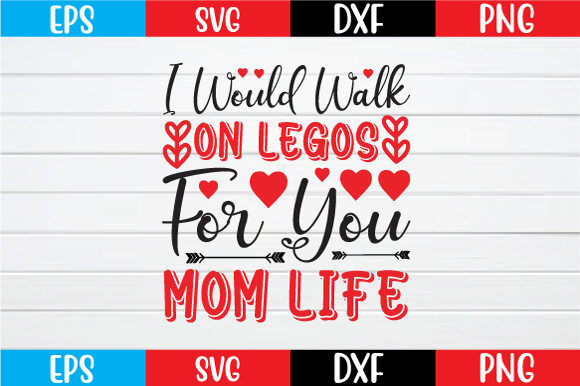
My first impression of this artwork is its strong typographic hierarchy. For an embroidery project, text-heavy designs live or die by their font choices and spacing. This design appears to balance a playful aesthetic with readable structure, which is essential for custom apparel and personalized gifts. In the realm of Crafts and Graphics, this specific sentiment serves as an excellent anchor for boutique products because it targets a niche emotional trigger. As a designer, I see this working best not as a generic clipart insertion, but as a centerpiece for items that get handled frequently, like tote bags or sweatshirts, where the tactile nature of thread enhances the message.
Real-World Application: Stitching the Sweatshirt Test
To truly evaluate this design, I mentally placed it in a real-life production scenario: creating a premium crewneck sweatshirt for an Etsy seller targeting millennial moms. Sweatshirt embroidery presents unique challenges due to the fleece backing and stretchy knit face. When hooping this garment, stability is paramount. I would treat the I Would Walk on Legos for You Mom Life file as a candidate for either a high-density fill stitch or an applique design, depending on the desired texture.
If executing this as a standard fill stitch, I would be hyper-aware of stitch density. Fleece tends to swallow stitches, so the design needs enough coverage to pop without becoming bulletproof. Conversely, if utilizing this as an applique design, the satin stitch borders must be wide enough to secure the fabric edge against the textured fleece. For this specific case, I envision using a cream-colored cotton fabric for the applique letters against a sage green sweatshirt. This combination softens the "pain" aspect of the Lego joke while maintaining high contrast for readability. The result is a handmade product that feels vintage and cozy rather than stiff and industrial. This level of intentionality is what separates a commercial embroidery success from a failed listing.
Fabric Compatibility and Hoop Size Considerations
While this design shines on stable knits, it requires caution on other substrates. When considering baby embroidery or lightweight summer tees, the stitch count becomes a critical variable. Heavy fill stitches on thin fabric can cause puckering or tearing. If you plan to use this design for baby clothes, verify that the embroidery file has been optimized for lighter materials. You may need to reduce stitch density or switch to running stitch outlines to maintain the garment's drape.
Hoop size also dictates the design’s effectiveness. On small hoop sizes, such as 4x4 inches, intricate details in the lettering can become lost. Tiny serifs or internal counters in the font may merge during stitching, resulting in illegible text. Before committing to a production run, always confirm the physical dimensions of the digital embroidery file. For curved surfaces like caps, this design might require significant modification. The horizontal span of "I Would Walk on Legos" suggests a left-chest placement on adult apparel is safer than a centered cap crown, unless the file includes a specific arched variation. Always test on scrap fabric first to ensure the stabilizer choice supports the design weight without distorting the final shape.
Visual Appeal and Commercial Viability
From a business perspective, the visual personality of this design directly impacts buyer engagement. Customers trust sellers who demonstrate technical competence. A finished product where the thread colors clash with the fabric or the registration is off will deter buyers. When preparing printable mockups for your shop, ensure they accurately represent how the satin stitch sheen interacts with light. Digital previews often look flat compared to the dimensionality of real thread.
For craft business owners and Etsy sellers, this design offers versatility across seasons. It works as holiday embroidery for family reunion shirts or as a year-round staple for mom-group merchandise. However, brand consistency matters. If your shop specializes in minimalist line art, a dense fill version of this design might feel out of place. Conversely, if your brand is bold and colorful, this design fits perfectly. The key is matching the stitch style to your existing inventory to maintain a cohesive shop aesthetic. Professionalism in presentation signals to the customer that the item is worth the price point.
Critical Designer Notes for Success
Before adding this to your commercial embroidery lineup or personal collection, adhere to these practical checkpoints:
- Verify Licensing: The product description mentions SVG compatibility for cutting machines, but embroidery usage rights differ. Confirm whether the license covers selling finished physical products versus digital redistribution.
- Test Thread Contrast: Never assume a color palette works. Test the design in black and white mockups to check value contrast before selecting thread colors. Low contrast kills readability in photos.
- Stabilizer Selection: Match your stabilizer to the fabric texture. Use cut-away for stretchy knits and tear-away for stable wovens. Improper stabilization is the number one cause of poor registration in text-based designs.
- Check Small Details: Inspect the embroidery file for any elements smaller than 2mm. These are prone to breaking needles or causing bird-nesting on home machines.
- Wash Testing: If selling tea towels or aprons, wash-test a sample. Satin stitches can snag, and fill stitches can shrink differently than the base fabric.
Elevating the Finished Product
Ultimately, the I Would Walk on Legos for You Mom Life design succeeds when treated as a component of a larger creative process rather than a standalone solution. Whether you are creating a personalized gift for a friend or stocking a boutique, the difference lies in execution. Pay attention to the interplay between the digital asset and the physical medium. Respect the limitations of your machine and the characteristics of your chosen fabric.
When executed correctly, this design transforms a simple phrase into a cherished keepsake. It validates the chaotic reality of parenting through the permanence of needle and thread. For makers and entrepreneurs, mastering this translation from screen to stitch is what builds a loyal customer base. Take the time to test, adjust, and refine. Your future customers—and their sore feet—will appreciate the quality of your work.