Mom in a Million: Embroidery Design Review
As a professional embroidery digitizer and product reviewer, I approach every new graphic with a specific question: will this actually stitch out well on fabric? When evaluating the Mom in a Million, Mother s Day Graphic, my focus shifts immediately from the screen to the hoop. This design sits squarely in the intersection of digital graphics and tangible crafts, promising a sentimental aesthetic that resonates deeply with the current market for personalized gifts. However, translating a colorful SVG or PNG into a durable machine embroidery design requires careful consideration of stitch density, fabric texture, and visual hierarchy. My assessment below is based on practical application for small business owners and makers who need reliable results for their customers.
First Impressions and Visual Personality
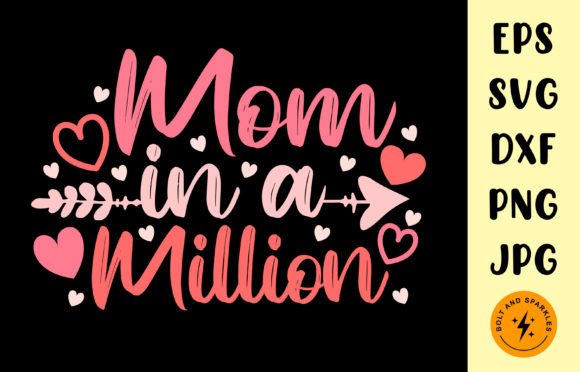
The initial mood of the Mom in a Million, Mother s Day Graphic is warm, celebratory, and distinctly modern. It avoids the overly frilly or dated aesthetics sometimes associated with holiday embroidery, leaning instead into a bold, graphic style that feels fresh. For an Etsy seller or boutique owner, this visual personality is crucial. It suggests a product that appeals to new mothers and trendy parents rather than just traditional gift-givers. The layout appears balanced, which is a strong indicator for successful digitizing. A centered, symmetrical composition generally translates better to custom apparel and tote bag designs than asymmetrical art that might pull or distort during stitching.
From a designer’s perspective, the included file formats—EPS, SVG, DXF, JPG, and PNG—offer excellent versatility. While these are primarily vector and raster graphics, they serve as perfect source material for creating a custom embroidery file. The colorful PNG version specifically acts as a reliable color map for selecting thread colors, ensuring the finished product matches the original artistic intent. This alignment between digital preview and physical output builds customer trust, especially when selling printable mockups alongside handmade products.
Real-World Application: The Sweatshirt Test
To truly judge this asset, I mentally placed it in a real-life production scenario: preparing a custom embroidered sweatshirt for a Mother’s Day capsule collection. Sweatshirts are a staple for craft businesses, but their fleece backing and stretchy knit structure present challenges. The Mom in a Million, Mother s Day Graphic seems ideally suited for this medium because of its likely bold lines and clear negative space.
In this scenario, I would utilize the SVG or EPS file to create an applique design rather than a full fill stitch. Why? Because large areas of dense satin stitch or fill stitch on a sweatshirt can create a bulletproof patch effect that ruins the garment's drape. By using the graphic as a guide for fabric applique, secured with running stitch and finished with satin stitch borders, the design remains lightweight and wearable. This approach also reduces stitch count, making commercial embroidery more profitable by decreasing machine run time. For a personalized gift, this method adds tactile value that buyers appreciate, distinguishing your work from mass-produced printed alternatives.
Navigating Fabric Limitations and Hoop Sizes
While the design shows promise for apparel, caution is necessary for smaller or more difficult substrates. If you intend to use this for baby embroidery on onesies or delicate nursery decor, scale is everything. Reducing a complex graphic to fit a 4x4 hoop size often results in lost detail. Tiny lettering or intricate interior elements may turn into indistinguishable thread blobs. Before committing to a production run of baby items, verify that the core message remains legible at reduced sizes. You may need to simplify the design assets specifically for miniature applications.
Textured fabrics like terry cloth tea towels or canvas tote bags also demand attention. The Mom in a Million, Mother s Day Graphic must have sufficient underlay and top stitch definition to prevent sinking into the pile. On high-texture surfaces, thin running stitches disappear. I recommend testing the design on scrap fabric first, using a water-soluble topping to keep stitches visible. Conversely, on thin or stretchy performance fabrics, excessive stitch density can cause puckering. Always pair this graphic with the appropriate stabilizer; a cut-away mesh for knits and a tear-away for stable wovens. Never assume a one-size-fits-all stabilizer approach works for a versatile graphic like this.
Commercial Viability and Brand Consistency
For creative entrepreneurs, the value of this graphic extends beyond a single project. It serves as a foundational element for brand consistency across multiple product lines. Using the same visual theme for an embroidered patch, a digital download, and a physical tote bag creates a cohesive shop identity. The inclusion of multiple file types supports this ecosystem. You can use the PNG for social media marketing and listing photos, while using the vector files to generate consistent sizing for various merchandise.
However, professionalism hinges on execution. A poorly stitched version of a beautiful graphic damages buyer engagement. Pay close attention to thread color contrast against different fabric backgrounds. A design that pops on white cotton might vanish on heather grey french terry. Test the design in black and white mockups to ensure the values hold up without relying solely on color differentiation. This step is vital for accessibility and ensures your handmade product looks intentional and polished in every variation.
Essential Designer Notes for Success
Before loading this design into your machine or listing it in your shop, adhere to these practical checkpoints:
- Verify Licensing: Confirm whether your purchase includes commercial rights for selling finished physical products versus digital embroidery files. These licenses often differ.
- Digitize Responsibly: Since this is a graphic package and not a pre-digitized embroidery file, ensure you or your digitizer creates proper stitch paths. Do not simply auto-digitize the SVG, as this often leads to poor stitch economy and tension issues.
- Check Small Details: Inspect corners and curves. Sharp angles in vector art often need rounding in embroidery to prevent needle breaks and thread buildup.
- Mockup Realistically: Use the provided JPG or PNG to create accurate previews, but always photograph a real stitch-out for your primary listing image to manage customer expectations regarding texture and sheen.
- Wash Testing: If selling items meant for frequent washing like aprons or kitchen towels, test wash the embroidered sample to ensure the stitch density holds up and the stabilizer doesn't degrade.
Final Thoughts on Production Value
The Mom in a Million, Mother s Day Graphic represents a strong opportunity for makers who understand the translation process from screen to stitch. Its success lies not just in the artwork itself, but in how thoughtfully it is adapted for the medium. Whether you are creating a sentimental holiday gift or stocking a boutique with custom apparel, treat this graphic as a blueprint rather than a final destination. Respect the limitations of your fabric, honor the integrity of the design through proper digitizing, and always validate your assumptions with physical tests. When executed with this level of care, this design has the potential to become a bestseller in your embroidery project lineup, delivering both aesthetic beauty and commercial reliability.