Mom Rose: A Designer’s Review for Real Embroidery Projects
When evaluating a new graphic for production, I look past the digital preview and imagine the needle hitting fabric. As an experienced designer and product reviewer, my assessment of Mom Rose focuses entirely on its viability as a functional machine embroidery design. While this asset is categorized under Crafts and Graphics, its true value lies in how well it translates from screen to stitch. The provided formats—SVG, Transparent PNG, EPS, and DXF—are excellent for digital crafting and cutting machines, but for those of us running embroidery businesses, these vector and raster files serve as essential blueprints for digitizing or verifying design integrity before committing to a finished product.
First Impressions and Visual Personality
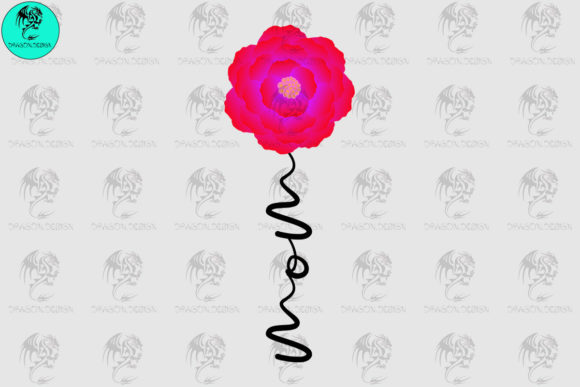
Mom Rose immediately strikes a balance between classic sentiment and modern versatility. In the world of custom apparel and personalized gifts, floral motifs can sometimes feel dated or overly complex. However, this design possesses a clean visual hierarchy that suggests it will digitize beautifully without unnecessary bulk. The mood is warm yet structured, making it suitable for both sentimental baby embroidery projects and sophisticated boutique merchandise.
From a layout perspective, the composition feels centered and intentional. It avoids the chaotic sprawling often seen in amateur florals, which is critical when working within specific hoop size limitations. For an Etsy seller or small shop owner, this kind of visual clarity builds customer trust. Buyers need to see exactly what they are getting, and Mom Rose offers distinct lines that promise a professional outcome rather than a muddy, indistinct clump of thread.
Real-World Application: The Custom Sweatshirt Test
To truly judge this asset, I mentally placed it in a current market scenario: creating a premium crewneck sweatshirt for a Mother’s Day capsule collection. This is a high-stakes embroidery project because fleece and French terry fabrics are unforgiving. They have texture and stretch that can distort poorly planned designs.
In this context, Mom Rose performs exceptionally well as a left-chest placement or a centered back piece. If utilizing the SVG or EPS file to create an applique design, the shapes appear defined enough to cut cleanly with a laser or vinyl cutter, reducing fraying during the stitching process. For direct embroidery, the line weight suggests it could handle a combination of satin stitch borders and lighter fill stitch interiors. This balance is vital for sweatshirts; too much density makes the garment stiff and unwearable, while too little gets lost in the fabric pile.
I also envision this working seamlessly for a tote bag design. Canvas provides a stable foundation, allowing for higher detail retention. Here, Mom Rose could serve as the primary branding element for a handmade business, perhaps paired with custom text. The transparency of the included PNG file makes it incredibly easy to drop into printable mockup software, allowing sellers to showcase the design on various products before stitching a single sample. This efficiency is a massive time-saver for creative entrepreneurs managing multiple listings.
Navigating Fabric Challenges and Technical Limits
Despite its versatility, Mom Rose requires strategic planning depending on the substrate. Not every fabric texture is created equal, and understanding where this design might struggle is just as important as knowing where it shines.
- Stretchy Knits and Ribbing: If applying this to a baby onesie or stretchy knit top, you must account for distortion. The organic curves of a rose can warp if the stabilizer choice is inadequate. I recommend testing on scrap fabric first to ensure the petals don't pull apart during washing.
- Textured Towels and Terry Cloth: For kitchen towels or blankets, the fine details in Mom Rose might get buried. You may need to increase the underlay or use a water-soluble topping to keep the stitches visible. Always check the stitch density to prevent the design from becoming bulletproof on plush fabrics.
- Curved Surfaces: When adapting this for caps or curved sleeves, verify that the aspect ratio works. Some floral designs lose their identity when resized for narrow hoops. Ensure the core "Mom" message remains legible at smaller scales.
- Dark Fabrics: Since the provided files include a Transparent PNG, visualize the contrast immediately. Light thread on dark fabric requires different coverage than dark on light. Test thread colors against your intended background to maintain readability.
Commercial Viability and Brand Consistency
For those running a craft business or selling digital assets, consistency is currency. Mom Rose has the potential to become a signature element across a product line. Its aesthetic bridges the gap between nursery decor and adult fashion, allowing for cross-category merchandising. An embroidered patch version could be sold separately or applied to denim jackets, expanding revenue streams without requiring new digitizing work.
However, professionalism extends beyond aesthetics. Before listing any commercial embroidery items featuring this design, verify your licensing terms. While the file formats suggest broad utility, confirming whether you can sell finished goods versus digital files is non-negotiable. Protecting your business means respecting intellectual property boundaries.
Furthermore, consider the perceived value. A crisp, well-executed Mom Rose on a personalized gift signals quality craftsmanship. Sloppy registration or poor tension devalues the item instantly. Because this graphic has clear definition, it acts as a benchmark for your machine's performance. If Mom Rose looks sharp, your customers will assume your entire catalog meets that standard.
Practical Notes for Makers and Sellers
Before launching this design into your production queue, adhere to these practical checkpoints to ensure success:
- Verify File Suitability: Remember that SVG, PNG, EPS, and DXF are primarily vector and raster formats. If you intend to embroider directly, confirm you have converted these appropriately or purchased a dedicated digital embroidery file format compatible with your machine. Do not assume an SVG auto-converts to stitches without manual digitizing input.
- Mockup Testing: Use the Transparent PNG to create black-and-white mockups. This strips away color bias and reveals structural weaknesses in the design layout. If it reads well in grayscale, it will likely stitch well.
- Stabilizer Matching: Pair the design weight with the correct backing. Lightweight tear-away for woven cottons, cut-away for knits, and adhesive sprays for tricky items like caps. Never skip this step for holiday embroidery rushes where rework costs profit.
- Scale Verification: Measure the physical dimensions of the design against your target product. A 4-inch rose looks vastly different on a bib than on a pillow cover. Adjust scale digitally before hooping to avoid proportion issues.
- Wash Testing: If selling small shop products intended for daily use, wash a test sample. Check for puckering, thread shrinkage, or color bleeding. Customer reviews hinge on durability, not just initial appearance.
Final Verdict for Production Use
Mom Rose stands out as a robust candidate for makers who prioritize clean aesthetics and commercial adaptability. Its strength lies in its balanced composition, which accommodates various techniques from applique to direct stitch. Whether you are producing custom apparel for a boutique, creating heartfelt holiday gifts, or expanding your digital asset library, this design offers a solid foundation.
Success with Mom Rose ultimately depends on technical execution. Treat the provided graphics as high-quality source material that demands respect during the digitizing and stitching phases. By paying attention to fabric interactions, stabilizer choices, and proper scaling, you can transform this digital asset into a tangible bestseller. For the discerning embroiderer, Mom Rose isn't just another flower file; it is a reliable tool for building a cohesive, professional brand identity in the competitive handmade marketplace.