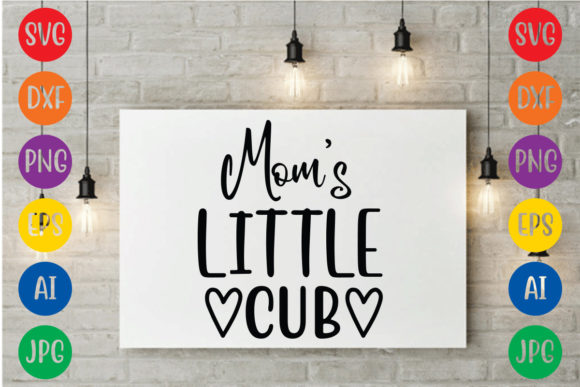
Mom's Little Cub SVG: A Designer’s Embroidery Review
As a professional embroidery designer and product reviewer, I approach every new digital asset with a critical eye. When evaluating the Mom's Little Cub Svg Design, my primary concern is not just how the graphic looks on a screen, but how it translates into thread on fabric. This design falls squarely within the Crafts and Graphics categories, targeting a specific emotional niche: maternal affection and woodland whimsy. However, for an Etsy seller, apparel decorator, or hobbyist, the true value lies in its structural integrity and versatility across different substrates. Having reviewed the provided assets, which include both an Adobe Illustrator source file and a word-by-layer SVG cut file, I see significant potential for high-quality handmade products, provided the user understands the technical nuances of converting vector graphics into stitch data.
First Impressions: Visual Mood and Structural Integrity
Upon opening the files, the immediate impression of Mom's Little Cub Svg Design is one of softness and approachability. The aesthetic is undeniably sweet, making it a natural candidate for baby embroidery, nursery decor, and personalized gifts. From a design perspective, the lines appear clean and purposeful, which is crucial when digitizing for machine embroidery. Cluttered vectors often result in messy stitch outs, but this graphic maintains a balance between detail and simplicity.
The inclusion of the AI file is a massive advantage for serious designers. Unlike flattened raster images, the vector source allows you to adjust line weights before digitizing. If you plan to use this as an applique design, the separate layers in the SVG are invaluable. They allow you to isolate specific elements—perhaps just the cub’s face for a small patch or the full composition for a sweatshirt embroidery project. This modularity suggests the creator understood that crafters need flexibility. For those creating commercial embroidery products, this adaptability means you can create a cohesive collection rather than being stuck with a single, static image.
Real-World Application: Stitching a Custom Sweatshirt
To truly evaluate this asset, let’s consider a real-life scenario: creating a custom apparel piece, specifically a heavyweight cotton sweatshirt for a boutique holiday collection. This is a common request for small shop products where perceived value must justify a higher price point. When applying Mom's Little Cub Svg Design to fleece or French terry, the fabric texture becomes a variable. These fabrics have a pile that can swallow fine details.
In this context, I would utilize the SVG layers to slightly thicken the outer lines if I were using a satin stitch border. If the design includes intricate facial features, a running stitch might get lost in the fleece nap. Here, the AI file proves its worth; I could expand the stroke width by 0.5mm to ensure the stitching remains visible after washing. For the fill areas, adjusting the stitch density is vital. Overly dense fills on sweatshirts can cause fabric distortion or "bulletproof" stiffness, while under-dense fills leave gaps. This design’s clean geometry lends itself well to a light-to-medium density fill stitch, maintaining the garment's drape and comfort. The result is a professional-grade finished product that feels handmade yet polished, exactly what discerning customers expect from Etsy sellers and independent brands.
Navigating Fabric Variables and Hoop Limitations
While the design is versatile, it requires careful consideration regarding placement and substrate. Not all projects are created equal, and Mom's Little Cub Svg Design will perform differently depending on where it lives.
- Stretchy Fabrics: On ribbed knits or spandex blends, stabilization is non-negotiable. The organic shapes of this design could distort if the fabric shifts during hooping. Always use a cut-away stabilizer and consider a topping for textured materials to prevent stitches from sinking.
- Small Hoop Sizes: If you are working with a 4x4 hoop size for baby onesies or caps, you must simplify. Do not attempt to shrink the entire complex design down to 2 inches. Instead, use the layered SVG to extract a single element, like the cub head, ensuring the stitch count remains manageable and the details remain legible.
- Curved Surfaces: For cap embroidery or sleeve cuffs, the flat nature of the vector must be compensated for during digitizing. Distortion correction is necessary to ensure the "Little Cub" doesn't look warped once wrapped around a curved surface.
- Dark vs. Light Fabrics: Test your thread colors against both backgrounds. A design that pops on white cotton may vanish on navy fleece. You may need to add a white underlay base or adjust the color palette entirely to maintain contrast and visual appeal.
Professional Notes for Digitizing and Production
For fellow designers and creative entrepreneurs, treating Mom's Little Cub Svg Design as a blueprint rather than a final product is key to success. Since this is a digital download only, the responsibility of digitizing falls on you. Before committing to a production run or listing a new item in your shop, adhere to these practical guidelines:
- Test on Scrap Fabric First: Never stitch directly onto a sellable item without a test run. Use a scrap of the exact fabric you intend to use. Check for registration issues between layers and verify that the stitch density interacts correctly with the material weight.
- Verify Licensing and Usage: While the file includes source assets, always confirm the specific license terms included in your zip file. Ensure you have the right to sell finished physical products versus selling the digital embroidery file itself. Protecting your business starts with respecting intellectual property.
- Create Printable Mockups: Use the high-resolution vector files to create realistic digital previews for your listings. Customers respond better to seeing the design on a virtual tote bag or pillow cover than viewing a flat JPEG. This boosts buyer engagement and reduces questions about scale and proportion.
- Check Thread Color Contrast: Simulate the design in black and white within your embroidery software. If the design relies solely on color to define shapes, it may fail in monochromatic embroidery. Good design holds up in grayscale.
- Inspect Small Details: Zoom in to 400% in your digitizing software. Are there anchor points too close together? Will the needle perforate the fabric in tight corners? Clean up nodes in the AI file before importing to your embroidery software to ensure smooth stitch paths.
Enhancing Brand Value Through Thoughtful Execution
Ultimately, the success of any embroidery project hinges on execution. Mom's Little Cub Svg Design offers a strong foundation for a variety of items, from tea towels to holiday gifts. However, it is the maker's attention to detail that transforms a digital file into a cherished keepsake. By leveraging the editable nature of the AI and SVG files, you can tailor the design to fit your specific brand aesthetic and customer base.
For small business owners, consistency is key. Using this design as part of a larger, cohesive collection helps build brand recognition. Perhaps you use the same font pairing or color scheme across multiple "Mom and Me" sets. The flexibility of this graphic supports that level of customization. Furthermore, presenting your work professionally—with clear photos of the actual stitched texture, not just digital renders—builds customer trust. Buyers want to see how the satin stitch catches the light or how the fill stitch lays on the fabric.
In conclusion, Mom's Little Cub Svg Design is a robust asset for the modern maker. It bridges the gap between cute aesthetics and functional utility, provided the user applies sound embroidery principles. Whether you are crafting a personalized gift for a friend or scaling up production for a craft fair, taking the time to understand the relationship between this vector art and your machine will yield beautiful, durable results. Remember to respect the medium, test thoroughly, and let the quality of your craftsmanship elevate the design beyond its digital origins.